Databricks announced that its annual revenue reached $5.4 billion, up 65% from the previous year. More than $1.4 billion of that revenue came directly from its AI products.
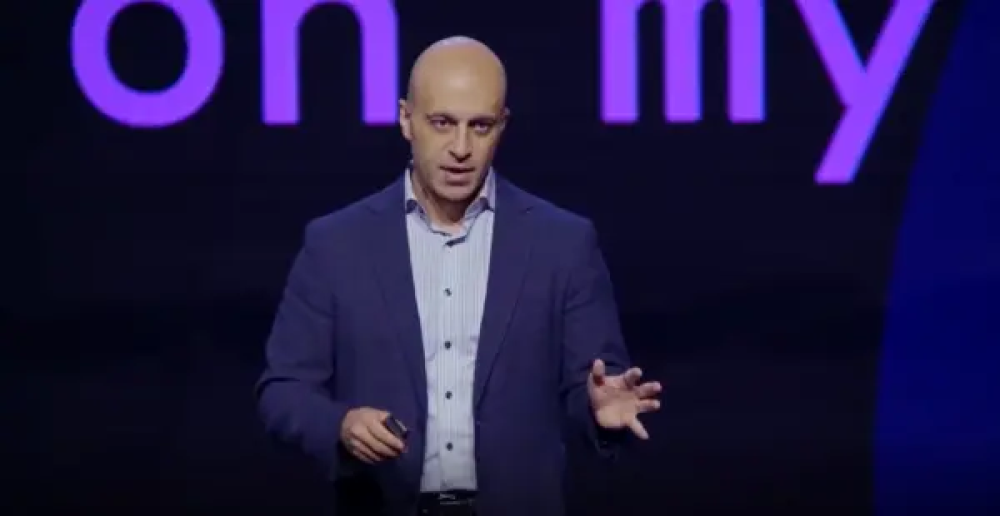
Databricks co-founder and CEO Ali Godsi told TechCrunch that the goal of sharing these numbers was to address the widespread debate about how the SaaS business will be “killed” by AI.
“Everyone says, ‘This is SaaS, what’s going to happen to these companies, what’s going to happen to them with AI?’ For us, it’s just about increasing usage,” Godsi said.
At the same time, he also wants to avoid referring to Databricks solely as a SaaS company, because in the private markets, the startup is seen as an AI company. On the same day, Databricks officially closed a previously announced $5 billion investment round, valuing it at $134 billion. In addition, the startup has attracted a $2 billion line of credit.
Nevertheless, Databricks still stands between the two worlds. The startup is best known as a provider of cloud-based data warehouses. Data warehouses are used by companies to store large amounts of data and conduct business analysis.
Godsi singles out one AI product in particular that is driving this growth — an LLM-based user interface called Genie. Genie is an example of how classic interfaces are being replaced by natural language in SaaS products. For example, Godsi uses it to ask simple questions about data warehouse usage and why revenue increased on certain days.
A few years ago, such queries required writing queries in specialized technical languages or having separate reports prepared. Today, anyone can use any product with an LLM interface. Godsi says Genie is one of the main reasons for Databricks’ growing usage statistics.
The real threat to SaaS, he says, isn’t, as some investors joke, that companies will dismantle their existing “systems of record” and build their own AI-powered solutions. These systems store critical data like sales, customer support, and finance, and they’re notoriously difficult to migrate.
“Why change the system of record? It’s not easy,” Godsey says.
Moreover, companies building AI models don’t offer a base system to store that data. Their main goal is to replace the user interface with natural language, APIs, or plug-ins for AI agents.
Godsey believes the main risk to SaaS is that people no longer need to be experts on a specific product for years — experts on Salesforce, ServiceNow, or SAP, for example. When the interface becomes a language, the products become “invisible,” tools that run in the background like plumbing.
“Millions of people have been trained on these interfaces, and that’s the biggest line of defense for those businesses,” he warns.
SaaS startups that adopt LLM interfaces early can grow, as Databricks did. But it also leaves room for AI-native competitors to offer more viable alternatives.
That’s why Databricks has created a new database called Lakebase, which is specifically designed for AI agents. Godsey says that despite only being on the market for eight months, it has already generated twice as much revenue as Databricks’ classic data warehouse in its first eight months.
“Yeah, it’s a bit like comparing children,” Godsey jokes. “But it’s a child twice as big.”
Meanwhile, after closing a large investment round, he said that Databricks has no plans for new funding or an IPO anytime soon.
“This is not a good time to be a stock,” Godsey stressed. He said that the 2022 interest rate hike was a lesson in how quickly markets can change. “A strong financial reserve protects us and gives us time to work for many years.”