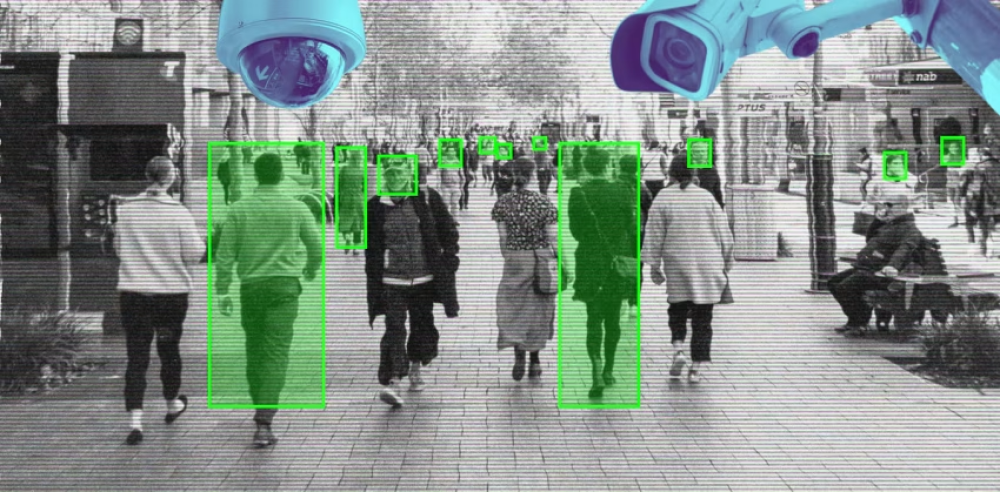
More than one million people had their faces scanned during a real-time facial recognition technology trial in Western Australia. The five-month trial resulted in 122 arrests and nine false alerts.
Western Australia Police said that 1,380,882 faces were scanned across 100 operations at 43 metropolitan and regional locations during the trial, which concluded on Saturday.
The system’s alerts led to 122 arrests. Police also made contact with 146 registered sex offenders and located 10 people to check on their health and safety.
The operations included three deployments at the Perth Royal Show. A total of 223,749 faces were scanned at the event, generating 15 alerts. These resulted in three arrests and seven “interactions” with registered sex offenders.
A police spokesperson confirmed that the system generated nine false alerts across the 1.38 million scans, representing a false alert rate of 0.00065%.
Speaking at a press conference on Sunday, Western Australia Police Commissioner Col Blanch addressed the false matches. He confirmed that officers had contacted each of the individuals involved.
“I want to be very clear about these false alerts. Nobody was arrested. Nobody made a complaint. Every case resulted in contact with that person and asking them the necessary questions,” Blanch said.
He added that the figure was very, very low, although not zero, and that the police would have preferred it to be zero. According to Blanch, the important point was maintaining communication with the public, just as officers would when a person mistakenly believes someone is wanted by police.
Blanch acknowledged that the technology was “not perfect” and that authorities had known this when the trial began. However, he argued that officers followed the same procedures they would use if a member of the public reported a suspicion about someone.
Civil liberties advocates, however, criticised the way Western Australia Police presented the false alert rate.
Bill Rowlings, CEO of Civil Liberties Australia, said that describing the false alert rate as 0.00065% significantly overstated the system’s performance. In his view, the rate should instead be calculated by examining how many of the people arrested are ultimately convicted.
“We will only know what the real error rate is when the 122 people arrested have appeared in court,” Rowlings said.
He also said that police had conducted approximately 1.4 million scans “without any reasonable suspicion”. According to Rowlings, if half of the 122 people arrested are not convicted, the error rate would be 50%.
Sarah Schwartz, Legal Director at the Human Rights Law Centre, said every false match represented a real person who could be stopped, questioned or investigated because of an algorithm’s mistake. She added that these errors had real consequences for people in Western Australia.
Schwartz questioned whether subjecting more than one million people to such extensive biometric surveillance was proportionate in a democratic society. She also expressed particular concern about the use of surveillance vans at public events.
When the trial was announced, the state’s independent privacy watchdog, the Office of the Information Commissioner of Western Australia (OIC WA), said it was not involved in the process and warned of “mass privacy harms”. The office has been contacted for comment.
Speaking on Sunday, Blanch said the trial was focused on “responsibly using modern technology to identify people who pose a risk, without affecting the daily lives of the vast majority”.
Under the trial guidelines, cameras mounted on or positioned near police vehicles scanned faces in designated public areas and compared them with a watchlist drawn from police databases. Police said images of people who were not on the list were blurred in real time and immediately deleted without being stored.
The trial had previously attracted criticism over privacy concerns and algorithmic bias. Experts say facial recognition algorithms have historically produced higher false match rates for people with darker skin tones. As a result, the technology could disproportionately affect disadvantaged groups that are already overrepresented on police watchlists.
Schwartz said the oversight and governance framework surrounding the technology remained unclear. She argued that Western Australia Police had provided very little detail about the safeguards governing its use. Policies shared with the public appeared largely copied from overseas models and left critical questions about misuse, bias and accountability unanswered.
The surveillance equipment has now been removed from public spaces while the police department conducts an internal assessment of the technology’s performance in the field and its social impact. The review also includes checking whether all requirements and safeguards have been met.