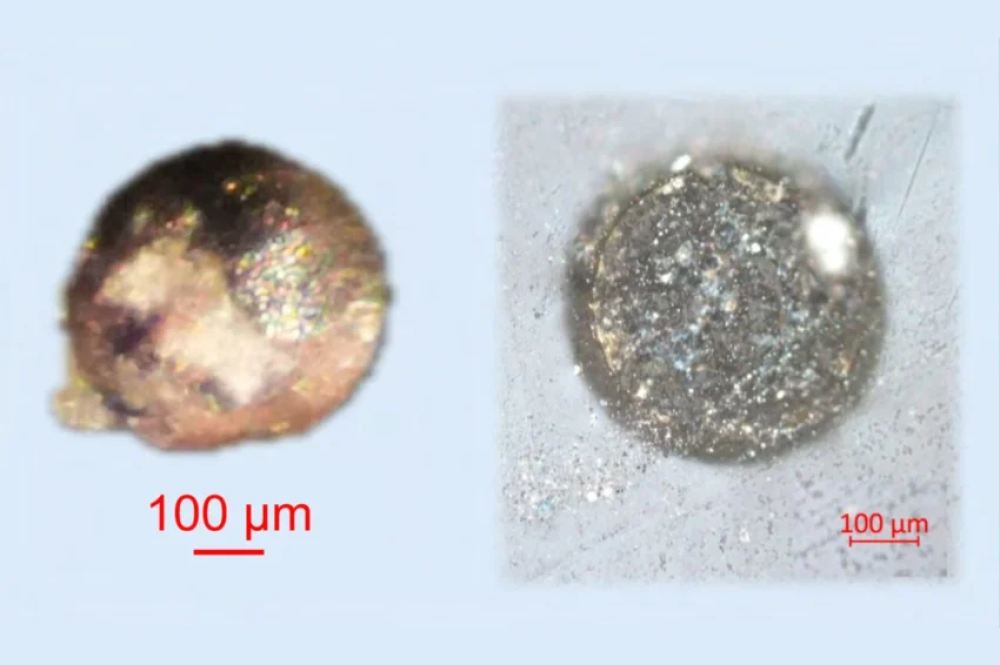
Scientists have discovered a new, previously unknown crystal alloy that was formed as a result of the atomic bomb dropped on Hiroshima in 1945. The results of the study are published in the journal Science Advances.
An international research team led by Luca Bindi, a geologist and crystallographer at the University of Florence, identified a silicon-rich, multi-component metal alloy while studying microscopic particles formed after the atomic explosion. According to the scientists, this substance consists of five or more basic metal elements and can only be formed under extreme conditions of temperature and pressure.
During the study, 34 microscopic samples collected from Hiroshima were subjected to high-precision X-ray analysis. In one of them, a completely new crystal structure was discovered, consisting of elements such as iron, nickel, silicon and aluminum.
According to experts, during the atomic explosion, the temperature rose above 7,000 ° C and the buildings, metal, glass and other materials in the city turned into plasma and then cooled rapidly. It was precisely as a result of these extreme conditions that the new crystal alloy was formed.
Scientists believe that this discovery could not only contribute to a better understanding of the effects of nuclear explosions, but also contribute to the development of new materials with high strength, heat resistance, and corrosion resistance.