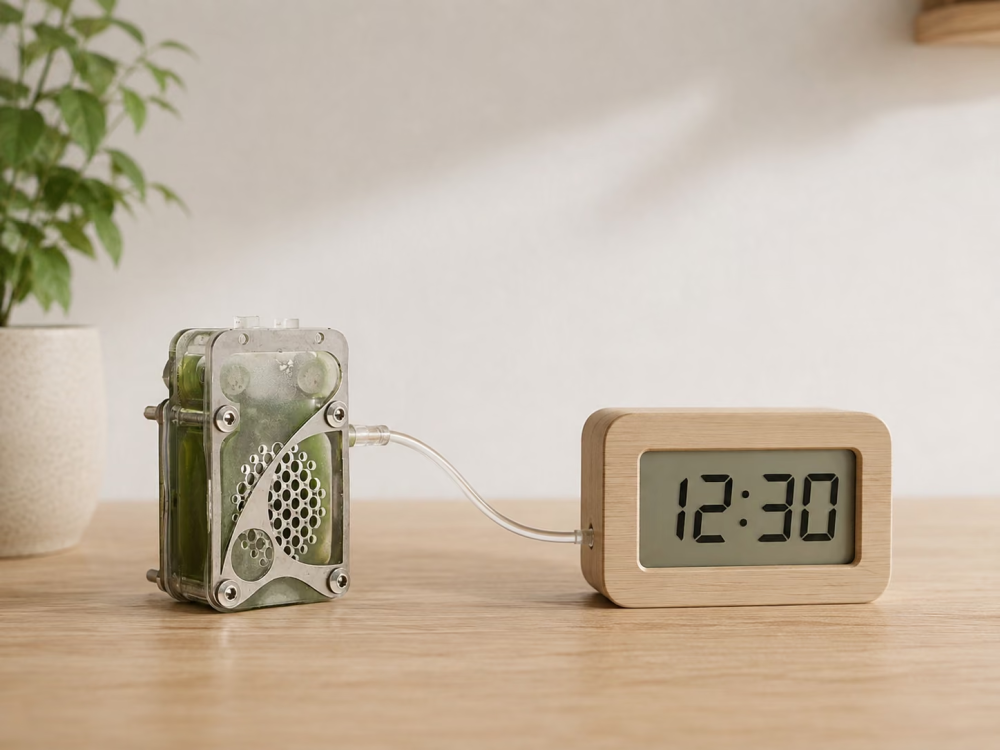
Researchers at the University of Cambridge and bioengineer Lucia Hiron have developed a new energy source that uses living cyanobacteria (blue-green algae) instead of lithium. The technology, called Biocell, could be an environmentally friendly alternative for low-energy electronic devices in the future.
The system is based on biological photovoltaics technology. During photosynthesis, cyanobacteria convert sunlight into chemical energy and at the same time generate electricity. Only sunlight, water and carbon dioxide are enough for them to work. Interestingly, electricity production continues even after sunset thanks to the metabolic activity of cells.
Scientists say that this technology could reduce dependence on rare materials such as lithium and help reduce the number of billions of disposable batteries that end up in waste every year.
The team has already developed an electronic clock, a temperature sensor and a monitoring system for houseplants that work with this energy source. A startup called e-Pho has also been created to commercialize the technology.
Currently, biobatteries are only suitable for low-power sensors, remote controls and similar devices. It is not yet possible to replace smartphone or laptop batteries.