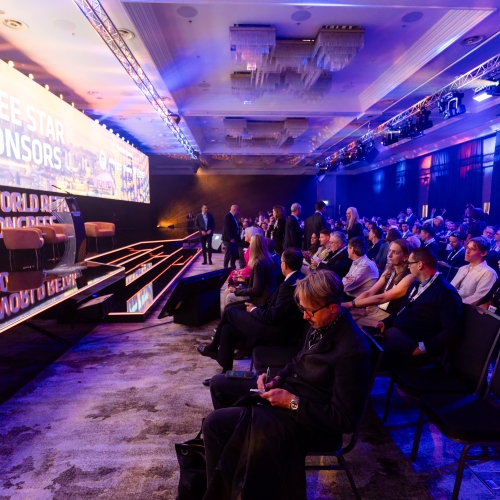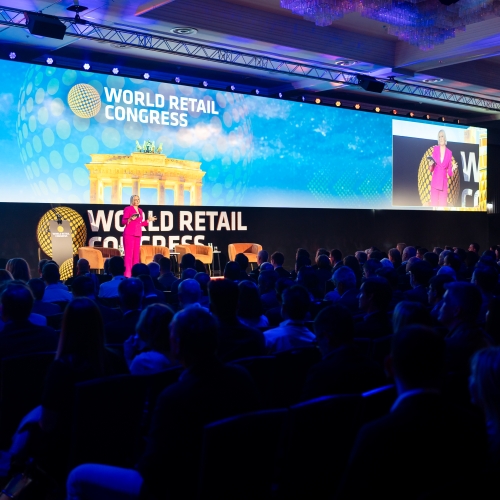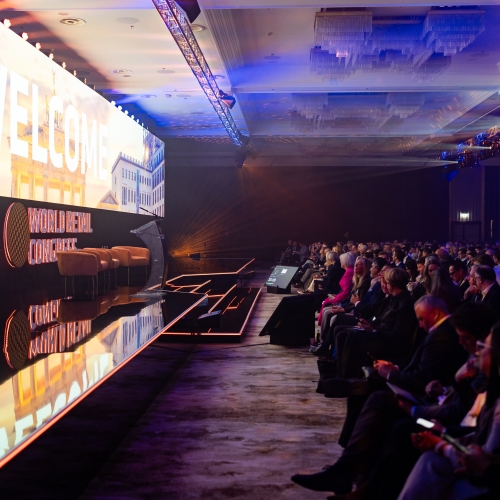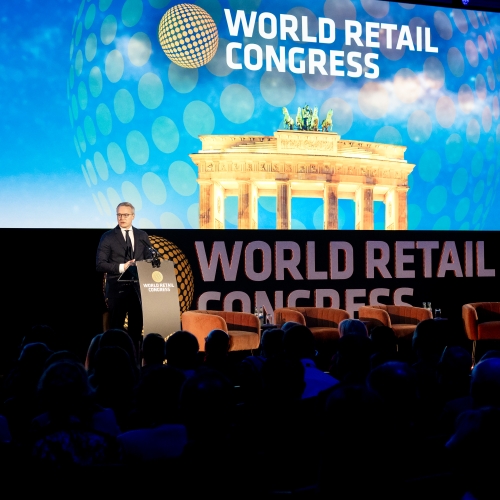
OBI and Action store tours, Karsten Wildberger's wake-up call, David Schneider's Berlin love letter, Bracken Darrell's life lesson, and 100+ conversations that made WRC the best retail event I've attended.
By Nail Valiyev, CEO of Youzu
Some events you attend because they are relevant. Others you attend because you can feel the industry shifting under your feet.
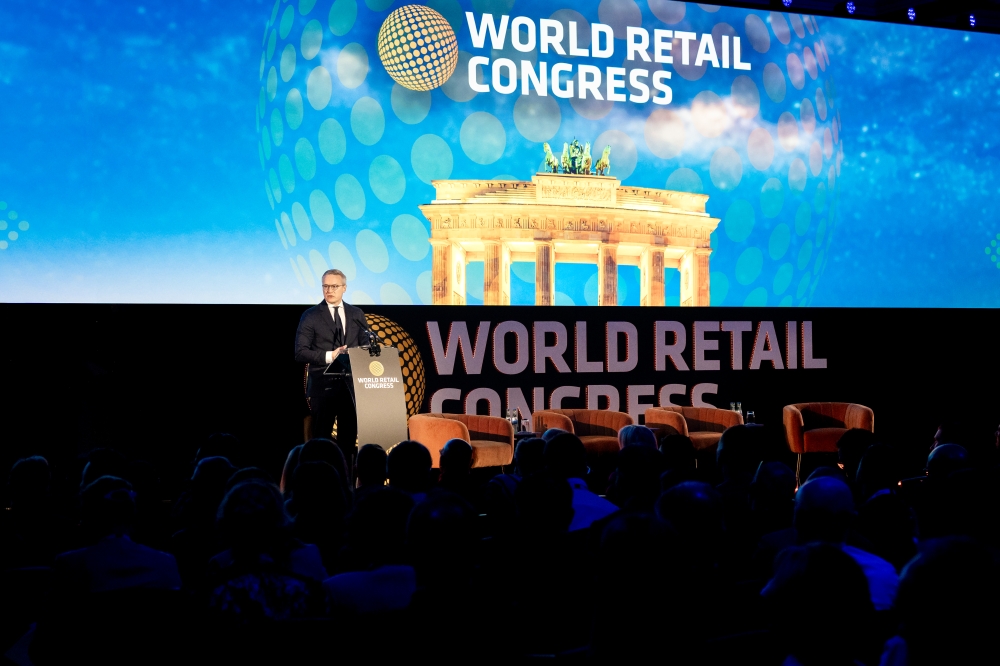
World Retail Congress 2026 in Berlin was the second type.
It was also my son's first birthday, which made the whole experience feel more personal. I spent part of that day surrounded by retail leaders from all over the world, talking about the future of stores, AI, commerce, consumer behaviour and Europe's ability to compete. Then I went back home to celebrate with my family. That contrast stayed with me: the future of retail on stage, and the future I care about most waiting at home with cake on his face.
And maybe that is why WRC worked so well for me. It did not feel like a conference where people sit in a ballroom, exchange LinkedIn QR codes, and pretend that networking happened. It felt more like a curated retail experience through Berlin. WRC did something different: it brought the retail community into the city, into stores, into receptions, and into conversations that felt much more natural.
The best retail lesson of the week was still the shop floor
My WRC journey began with the Everyday Innovation flagship store tour, visiting Action and OBI.
That was the right place to start.
First stop: Action, hosted by Bart Raeymaekers, Director of Store Operations.
Action is one of those retailers that looks simple from the outside, until you spend time with the people running it. Then you realize the simplicity is the whole genius of the model.
Every SKU has to earn its place. Every shelf has a job. Every price point, pack-out, and store process has been engineered to make the customer feel: this is easy, this is good value, I can buy this now.
The customer sees simplicity.
The operator sees choreography.
From Action we went to OBI, hosted by Marius Pudlo, Pawel Sarnowski, and Ray Salzborn.
OBI was a completely different kind of lesson.
DIY is not a simple category. The customer often does not walk in thinking, "I need SKU 47291." They walk in thinking, "My kitchen feels wrong," or "I need to fix this wall," or "I want this room to finally look finished, but I have no idea where to start."
That is where good DIY retail becomes almost emotional. The store has to turn confusion into confidence.
The best parts of OBI were not just product displays. They were project displays. Cross-sell stations showing what else you need. End caps that sell the finished outcome, not the raw input. Little moments where the store quietly says: don't worry, we understand the job you are trying to get done.
That connected very directly to what we are building at Youzu.
In home, furniture and DIY, the biggest friction is often visual. What will the room look like when the project is finished?
That is exactly the problem behind Room Intelligence: turning empty or existing room photos into shoppable scenes, with every item connected back to the retailer's own catalogue.
But more broadly, OBI reminded me of something simple: great retail does not sell products. It helps customers complete an outcome.
OBI again: when retail media becomes more than ad inventory
Later in the Congress, I went to Patricia Grundmann's session, "From DIY to ROI: The OBI Retail Media Journey of Turning Data into a High-Margin Business."
This was one of the sessions I was most curious about, and it did not disappoint.
I spent part of my career in advertising, so I have always believed that first-party retail data is one of the cleanest signals in advertising. The theory is obvious. The hard part is turning that signal into a real business.
What Patricia and the OBI team have done is exactly that: turning OBI into a media platform for endemic brands already selling through OBI, and also for non-endemic brands that want to reach OBI's audience.
The detail that really caught my attention was the PayPal case.
Anyone who has worked in digital advertising knows attribution can get messy very quickly. What makes OBI's setup interesting is that so much of the customer journey happens inside their own owned online and offline ecosystem. The path from impression to conversion is fully observable inside their walls, and the PayPal layer closes the loop on payment-side identity. The result is an advertising business with attribution most brands can only dream about.
Catalogue intelligence pays twice: first by improving discovery on the shopper side, then by powering a real revenue line on the operator side.
After the store tours, the day ended at the opening reception at KaDeWe. Again, WRC got the format right. It was not just "networking." It was retail people meeting inside one of Berlin's most iconic retail spaces — which, if you think about it, is the most on-brand thing a retail conference could possibly do.
That first day set the tone for everything that followed: retail is changing fast, but it still starts with experience, execution and the physical world.
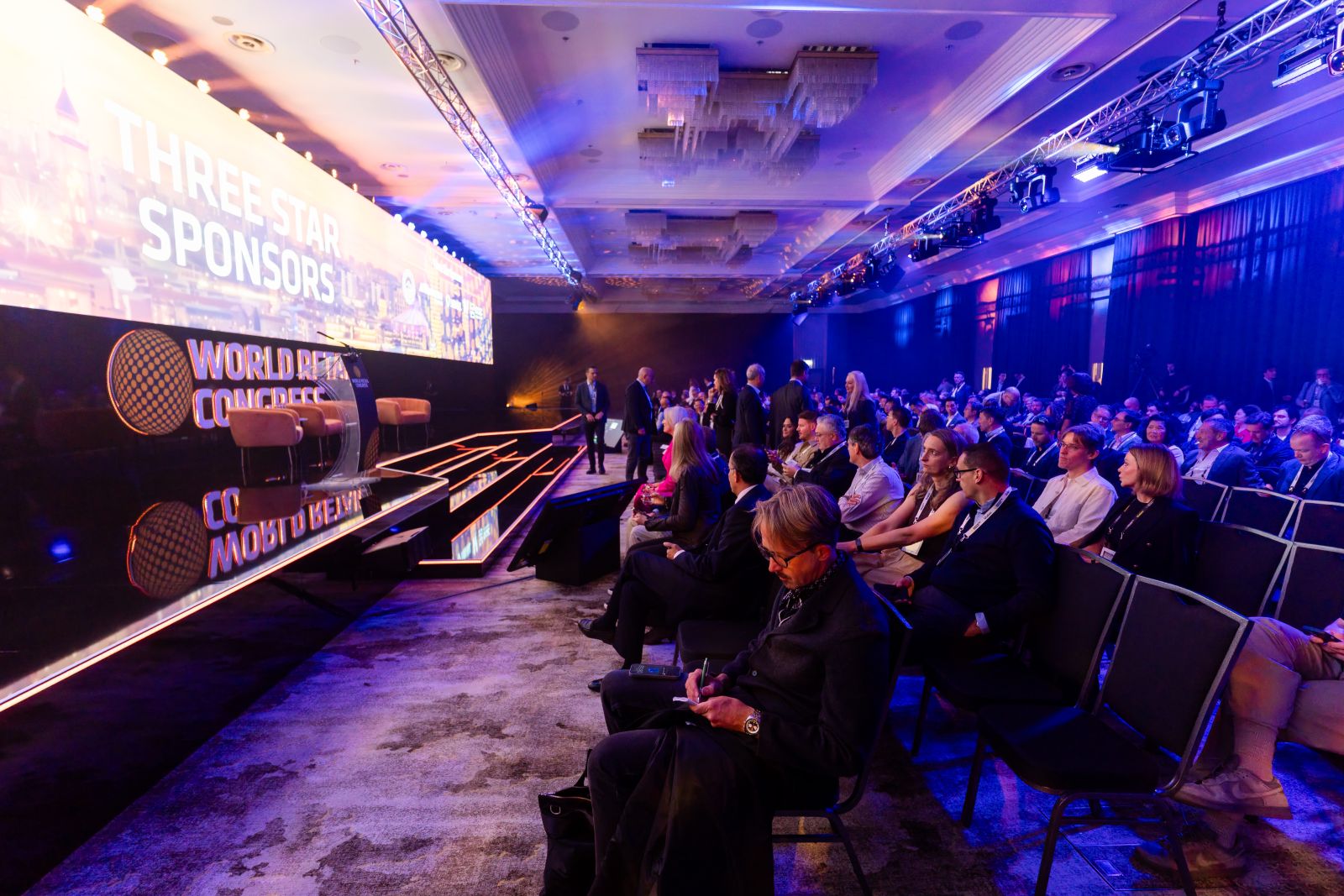
Germany, Berlin and the urgency to move faster
I know politicians are not usually the highlight of retail conferences.
But Karsten Wildberger, Germany's Federal Minister for Digitalization and Government Modernization, was different.
He did not sound like someone giving a ceremonial welcome. He sounded like an operator looking at Germany's product backlog.
Less bureaucracy. More digital embedded experiences. Make it easier to start, build and scale a company in Germany. Move faster.
That message matters because Germany and Europe do not have an ideas problem. They do not have a talent problem. They do not have an engineering problem.
They have a speed problem.
One of the stats he shared was devastating: US market capitalization has grown from 25 trillion to 70 trillion over the last decade, while Germany has barely moved from 1.8 trillion to 2 trillion. The exact numbers matter less than the way the room went quiet when he said them. No one was looking at their phone. A few people exhaled. The point landed because everyone already knew it was true; they just hadn't heard a German minister say it out loud.
Europe has watched too much value creation happen somewhere else.
I have met Mr. Wildberger briefly before at Web Summit in Lisbon, and then again in Berlin. My honest reaction is this: if more politicians in Germany had his mindset, Germany would be in a much stronger economic position.
Now, of course, speeches are easier than execution. Germany does not need another beautiful strategy document. It needs action.
But the direction was right. And the tone was right.
AI, digital infrastructure and modern business creation are not side topics anymore. They are economic policy.
David Schneider made Berlin sound like a product brief
Then came David Schneider, co-founder of Zalando.
He brought exactly the kind of Berlin energy the room needed.
One line made me smile. He said he asked Claude for the top highlights of Berlin, and the answer was: techno music, currywurst and startup culture. (Full disclosure: Claude helped me organise the notes for this article. So I was sitting in the audience watching one of Europe's most famous founders quote my note-taking app on stage. Berlin is a small town.)
I moved here because of that startup culture and because of the unique energy of the city. Berlin is imperfect, sometimes difficult, sometimes slow, but it still has something very special: people come here to build things differently.
That is why David's Berlin framing landed so well. Berlin is fragmented, subcultural, and full of communities. And that is also where retail is going.
The next decade of retail will not be won by generic experiences. It will be won by relevance. By understanding communities. By knowing not only what people buy, but what they are trying to express.
David also made AI feel practical. FashionUnited reported from WRC that Zalando now generates a very large share of its product marketing content with AI, while also using personalization, AI assistants and fit-related data to improve the fashion experience. The important part is that he did not position AI as a replacement for creativity. He positioned it as a way to remove bottlenecks and increase relevance.
The keynote I'll still be quoting in a year
The talk that stayed with me most came from Bracken Darrell, President and CEO of VF Corporation — the group behind Vans, The North Face, Timberland, Dickies and many others.
It stayed with me not because of a clever strategy slide, but because he started with a personal story.
He spoke about his mother, who divorced when he was young and kept circling back to the bad choices behind her: the marriage, the missed opportunities, the things she should have done differently.
As a child, Bracken found himself telling her: the choices are already made. It is up to us what to do with the time we have left.
That is such a simple sentence. But it is also a leadership philosophy.
Most boardrooms spend too much time on the autopsy and not enough on the next move.
The missed trend. The digital project that failed. The competitor who moved faster. The wrong hire. The delayed launch. The years when the company should have invested but did not.
Fine. Learn from it.
But then move.
I heard that as a retail lesson, but also as a founder lesson. There are things we did not do at Youzu in the last twelve months that I would do differently now. There are decisions I would make faster. Markets I would enter earlier. Conversations I would start sooner.
But Bracken's point is right.
The choices already made are already made.
What matters is what we ship next.
Clare Waight Keller reminded everyone that craft still matters
The other keynote that stood out was Clare Waight Keller, Global Creative Director of Uniqlo, in conversation with Marty Wikstrom of Fortnum & Mason.
In a week full of AI, agentic commerce, retail media and data infrastructure, Clare reminded the room that the customer still touches the product. Wears it. Lives with it. Feels something about it.
AI does not replace that.
At its best, AI helps more people discover it.
That is the balance I kept coming back to during WRC: technology scales discovery, but craft creates desire.
You need both.
The week kept circling back to one word: discovery
If I had to choose one invisible thread running through WRC, it would be discovery.
Agentic AI. Social commerce. Retail media. Luxury. The art of shopkeeping. AI-powered styling. Store design. Live shopping. Marketplace infrastructure.
Different topics, same underlying question:
How does the customer find the thing they actually want?
The session "The Discovery Imperative: How Agentic AI is Rewriting Retail" with Anne Claire Baschet of Mirakl, Romain Roulleau of Kingfisher, and Brian Tilzer, moderated by Chris Walton of Omni Talk, framed it very well.
As shoppers move into AI-mediated journeys, discovery becomes less of a marketing problem and more of a data infrastructure problem.
If agents are browsing, filtering and recommending on behalf of customers, then the retailers who win will not only be the ones with the best brand or the lowest price. They will be the ones whose product data is rich, structured, visual, machine-readable and context-aware enough to be found in the first place.
That is exactly the bet we are making at Youzu.
For the last 20 years, e-commerce has been built around search bars, category trees, filters and product detail pages.
But customers do not think in SKU data.
They think in moments.
Shopping starts with a moment of inspiration, and the job of the AI engine is to turn that moment into a purchase.
That is the core of Youzu: Catalogue Intelligence at the foundation, reading product images and product data; then Youzu Lens, smart recommendations and Room Intelligence on top.
Retailers want AI now. That much is clear.
But they want real stuff. They want infrastructure. Better catalogues. Better discovery. Better conversion. Better content. Better recommendations. Less friction between inspiration and checkout.
Visual discovery is becoming a new commerce layer.
Social commerce was not just on stage — it was happening in the hall
One of my favourite smaller moments was QVC.
I watched the panel with Robyn Cooke, Director of Social Commerce at QVC UK. But the best part was actually outside the conference hall.
QVC had a booth on the floor where one of their colleagues was livestreaming product demos in real time, mid-conference. So while panellists in the ballroom were debating the future of social commerce in the abstract, twenty metres away QVC was just… doing it. Camera. Host. Product. Audience. Live.
That, by itself, was the entire panel.
The social commerce conversation can become very abstract very quickly. Creator-led selling. Shoppable video. In-app checkout. Conversion loops. Fine.
But QVC has been doing the core format for decades. Live product storytelling. Host credibility. Demonstration. Trust. Urgency. Entertainment. Commerce.
Now everyone calls it live commerce.
QVC just adapted the muscle memory to TikTok and the new surfaces.
That is what good reinvention looks like: not abandoning what made you strong, but translating it into the next interface.
The ASOS conversation that stayed with me
I also attended the ASOS session with José Antonio Ramos Calamonte, and then walked up to introduce myself and Youzu afterwards.
What struck me was not only what he said on stage. It was how he listened in the conversation after.
He did not perform interest. He did not politely wait for me to finish. He asked real questions: how the engine would translate into ASOS's workflow, where the integration friction would sit, what the first signal would look like.
That kind of listening is underrated CEO behaviour.
And it compounds.
Across thousands of decisions, companies become the behaviour of their leaders. If the CEO listens that way, asks that way, and pushes for practical signal over theatre, it changes the operating culture.
ASOS is lucky to have José.
Beyond the stage — the conversations that mattered
By the end of WRC, I had a strong impression that the UK had one of the deepest digital retail conversations in the room.
Not the loudest. The deepest.
The UK has been ahead of much of Europe on digital retail for a long time, and WRC made that very visible.
Ollie Thompson from Mulberry made a point I kept thinking about: the modern CFO is no longer just a finance person.
To do the job properly, the CFO has to understand the technology stack, the product portfolio, the operating model, the customer journey and where financial performance is really created or destroyed.
The CFOs who act like scorekeepers will be replaced by CFOs who act like operators.
He is right.
I had a similar conversation with James Funnell from a different angle: traditional offline-first retailers investing seriously in digital, subscription models, and online growth not as a side channel but as a core capital allocation question.
The line between "online retailers" and "offline retailers" is disappearing.
At meaningful scale, everyone is building an omnichannel business.
The question is who is doing it intelligently.
Then there was Oli Lawson from Sigma Sports, who is making the CFO-as-operator point very concrete. Sigma is building a curated marketplace business, which is a serious move for a specialist cycling and triathlon retailer known for craft, trust and curation.
Adding marketplace breadth without diluting specialist credibility is not easy.
But if they get it right, it becomes a very interesting model.
Oli and James McEuen, Sigma's CEO, were also among the warmest personal conversations of the trip. At some point we stopped talking about marketplaces and started talking about Berlin, cities, life, and the strange cultural exchange that makes weeks like this worth the travel.
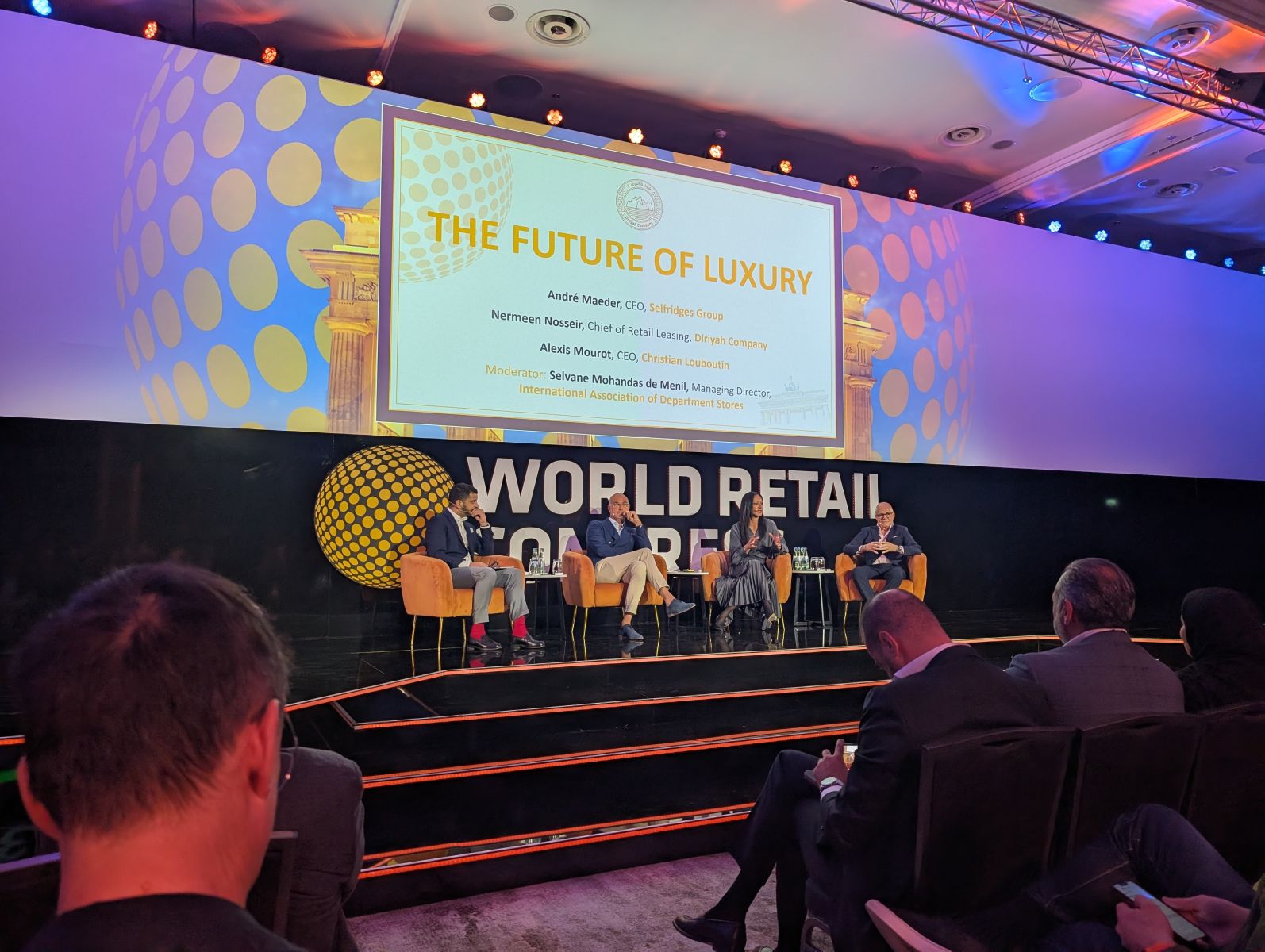
The Future of Luxury with André Maeder (Selfridges Group), Nermeen Nosseir (Diriyah Company), and Alexis Mourot (Christian Louboutin). The geographical centre of gravity in luxury is moving, particularly toward Saudi Arabia and the Diriyah project as a serious next-generation luxury market. Second, and more quietly significant: even traditional offline-first luxury houses and department stores are now investing heavily in their online businesses, building subscription-style customer relationships, and treating digital not as a cost centre but as a primary growth lever. André articulated this point with particular clarity. The luxury world spent a long time pretending digital didn't apply to it. That argument is over too.
The hallway conversations were the real programme
WRC's keynotes were strong.
But the hallway conversations are why I'll come back.
Conrad Digan, CEO of Shaws Department Stores, was one of the people I was happiest to meet. He spent years at M&S and Primark before becoming the first non-family CEO of Shaws, a 160-year-old Irish department store group.
That combination is rare: serious operations craft from some of Europe's toughest retail environments, now applied to a heritage independent.
He was also, by his own admission, the first Irishman I met that week who did not drink alcohol.
I respected both halves of that.
I also had a great conversation with Muhammad Yasin, Chief Commercial Officer at Junaid Jamshed, one of Pakistan's most established fashion and lifestyle brands. His perspective on building a multi-channel apparel business in a market that does not show up enough on European e-commerce maps was a useful reset for me.
That is one of WRC's quiet strengths. You do not get twenty minutes with a CCO from Karachi at most European retail conferences.
Andrew Khoo, CEO of MUI Group, had a different kind of clarity. MUI is a Malaysian conglomerate with deep heritage, now investing seriously in e-commerce and digital. Andrew spoke like someone who has already done the hard work of deciding what needs to change.
That is usually where transformation really begins.
And then there was Nilhan Onal Gökçetekin, CEO of Hepsiburada. I have crossed paths with Nilhan a few times now, and it was a real pleasure to see her again in Berlin.
Our conversation went into harder territory than most of the week: the moral weight sitting on business leaders right now, and the question of when to speak and when to stay quiet on humanitarian crises.
This is not a political post, and I do not want to turn it into one.
But the leadership question she raised has stayed with me: silence in the face of human tragedy is not always neutrality.
How that translates into action for a CEO or founder is complicated. I do not think there is one clean answer. But I do think more leaders should be willing to sit with the question.
There was even room for some investor meetings. I met wonderful people from True. and Carlsquare — Liam Buswell from True. and Eiji Nagasaki from Carlsquare. We talked quite deeply about Youzu and how we are changing the way e-commerce will work in the future.
With Eiji, we also drifted into my time in Japan, and the few nights we spent in the middle of nowhere in a 19th-century ryokan — the kind of place where dinner is served on a low table by someone who has been doing it the same way for 50 years, and the only sound at night is the wood settling. Some conversations are technical. Others are the reason you remember the trip.
I met other wonderful people from Japan too. Kunie Aoyama from Cainz Corporation, and Yumi Terashima from Hankyu Hanshin Department Stores.
What I'm taking home
A few days later, a few things have actually stuck.
The retail industry has stopped asking whether it needs AI. That argument is over. The harder question now is where AI belongs inside the organization, and who owns the answer. A lot of the most interesting WRC conversations were not really technology conversations at all. They were org-design conversations wearing technology clothes.
The shopper journey starts with a moment, not a query — and almost every retailer I spoke to recognized the same gap. Between the moment a customer sees something they want and the moment they can actually buy it, retailers are leaking attention, intent and revenue. Closing that gap is the prize.
The build-vs-buy line has moved. Retailers I would have expected to defend their in-house AI builds were openly looking for partners. The cost of building properly has gone up. The tolerance for slow experiments has gone down. That is good news for focused platform companies — and it is the clearest commercial signal I took home.
The growth story is broader than the old map. Some of the most ambitious retailers I met were from Japan, Türkiye, Malaysia and Indonesia.
The UK still leads much of Europe on digital retail. That pattern showed up again and again — at Mulberry, Sigma, Selfridges, ASOS and others. Continental Europe should study that lead more carefully than it does.
And Berlin is structurally undervalued. David Schneider captured it culturally. Karsten Wildberger captured it politically. This city and this country have the talent, the location, the institutions, the engineering depth — and now, maybe, a stronger political appetite for digital change. Whether Germany executes on that appetite is the open question. But the conditions are better than they have been in my time here.
And finally, Bracken's point is the one I keep returning to: what matters is not the choices already made. It is what you do with the time left.
Thank you
To Ian McGarrigle and the World Retail Congress team — thank you for putting on the best-curated industry event I have ever attended.
The store tours are not a side programme. They are the product. They turn the conference from a content event into a real retail experience. More event organizers should copy this.
To Bart Raeymaekers and the Action team, and to Marius Pudlo, Pawel Sarnowski, Ray Salzborn, Patricia Grundmann and the OBI team — thank you for making the store and retail media conversations so concrete.
To everyone who gave me time between sessions, in hallways, over coffee, at receptions and after-hours - the follow-ups are coming.
And to my son, who turned 1 last week and was generous enough to let Dad disappear into retail-future mode for three days, then came toddling over with sticky hands the moment I walked through the door:
Thank you.
Nail Valiyev is the co-founder and CEO of Youzu — the AI Engine for e-commerce. Catalogue Intelligence. Visual Discovery. One platform.
.jpg)