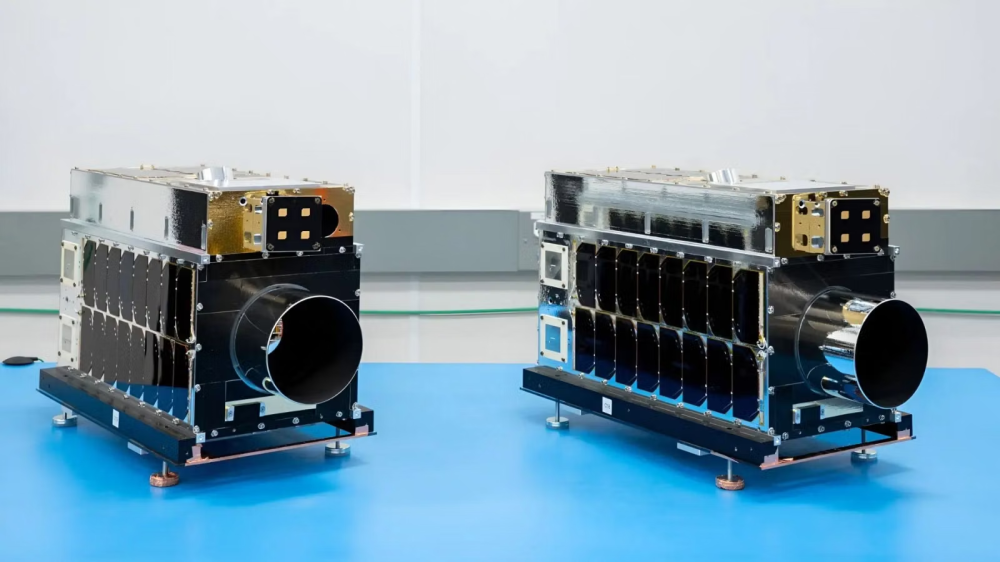
SpaceX has launched two new satellites for GHGSat, a constellation designed to detect and measure greenhouse gas emissions. Each satellite weighs around 15 kilograms and was launched on October 1 aboard the Transporter-18 mission from Vandenberg Space Force Base in California.
The two new spacecraft bring the number of satellites developed for GHGSat to 13. Rather than monitoring large areas of the Earth's surface, the satellites are designed to precisely measure emissions from individual industrial facilities.
Built by SFL Missions on its NEMO platform, the satellites operate at an altitude of around 500 kilometers and carry specialized sensors for greenhouse gas monitoring. Their high-precision attitude control system allows the spacecraft to keep their sensors accurately pointed at specific facilities while in orbit.
The data can be used to identify and assess emission sources across the oil and gas, energy, mining and waste management industries. Agriculture is also considered a potential application.